

Cambodia is a country where culture is not displayed loudly, but felt quietly — in the way people greet each other, in the rhythm of daily life, and in the deep respect shown toward tradition, family, and spirituality. For visitors, understanding Cambodian culture is not only helpful, but essential to experiencing the country in a meaningful and respectful way.
This guide helps international travelers understand Cambodian culture as a visitor, offering cultural insights, etiquette tips, and practical advice to travel with awareness, sensitivity, and appreciation.
The Heart of Cambodian Culture: Calm, Respect, and Resilience
Cambodian culture is deeply shaped by history, Buddhism, and community values. After centuries of glory, hardship, and recovery, Cambodians have developed a quiet resilience and gentle approach to life.
Key cultural values include:
- Respect for elders and authority
- Emotional restraint and calm behavior
- Strong family and community bonds
- Spirituality rooted in Theravada Buddhism
Visitors often notice that Cambodia feels slower, softer, and more inward-looking than many other destinations in Southeast Asia.
The Role of Buddhism in Daily Life
Theravada Buddhism plays a central role in Cambodian culture. Monks, pagodas, and religious rituals are woven into everyday life, not just special occasions.
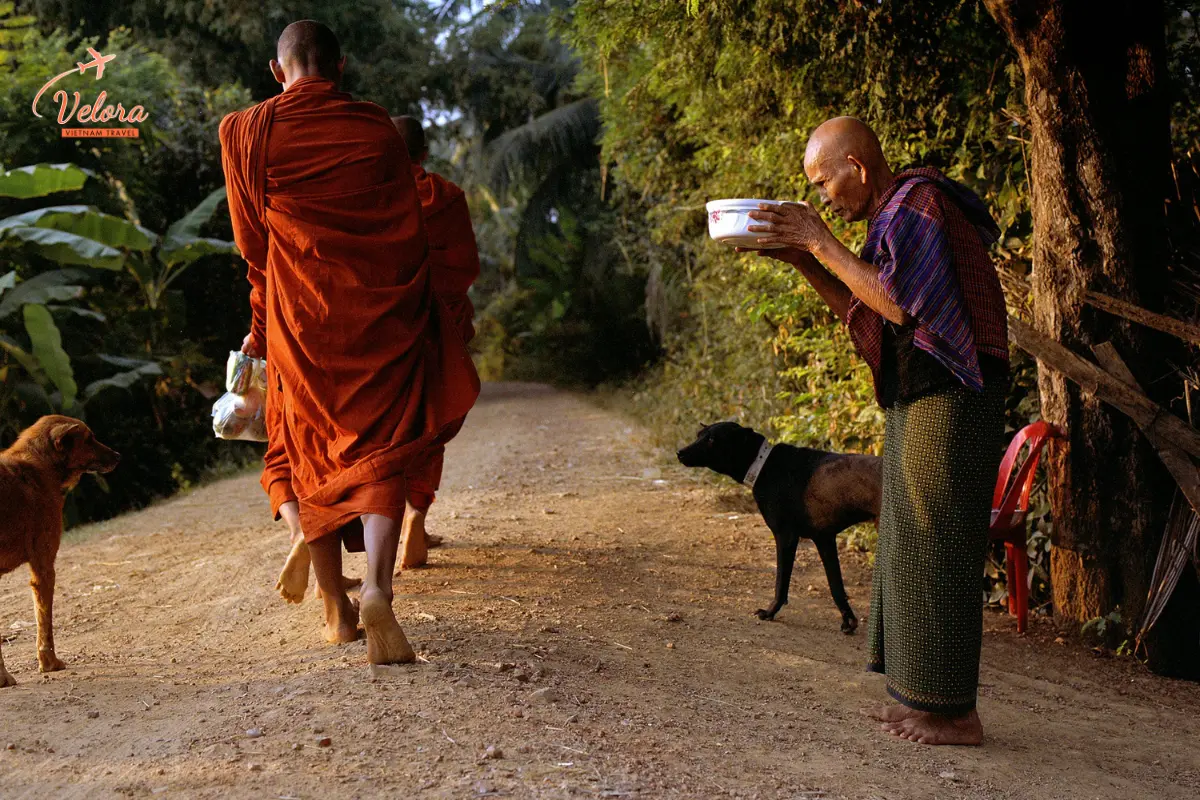
As a visitor, you may observe:
- Monks walking silently at dawn
- Families offering food at pagodas
- Incense smoke drifting in temple courtyards
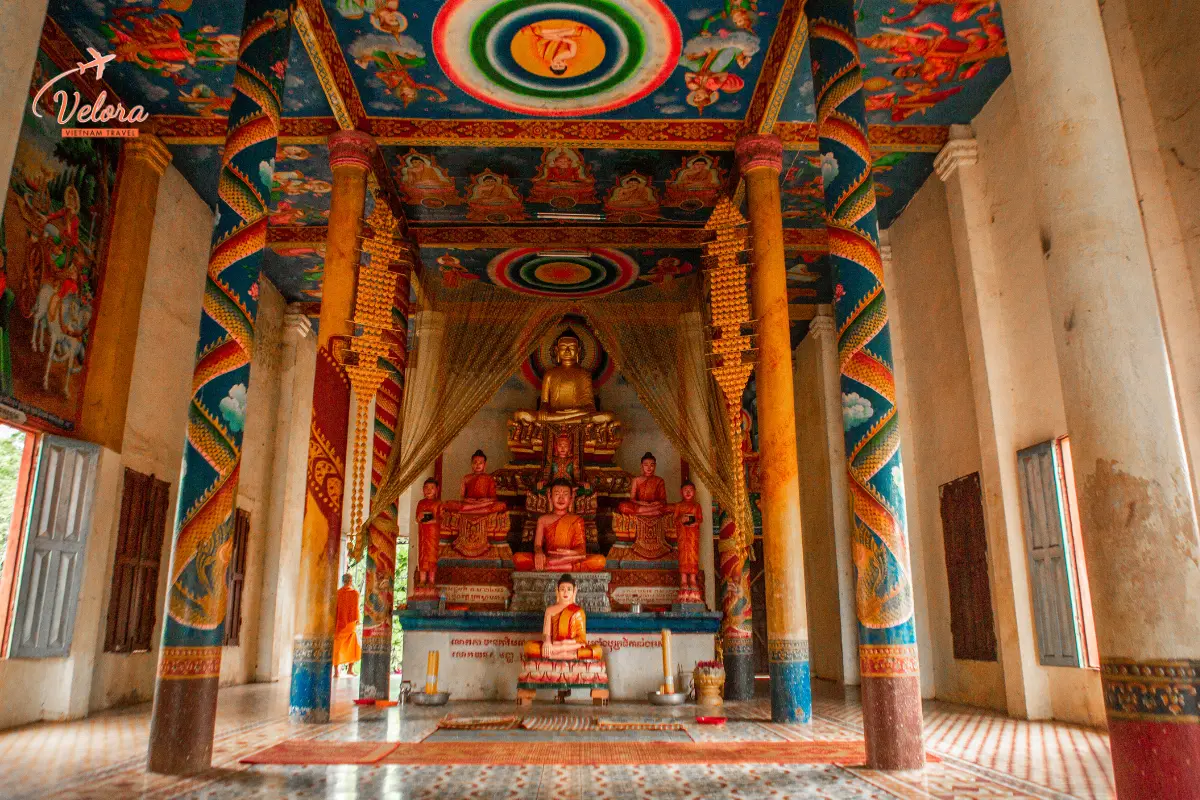
How Visitors Should Behave Around Temples
- Dress modestly (covered shoulders and knees)
- Remove shoes before entering sacred areas
- Speak softly and move calmly
- Never touch monks, especially if you are female
Showing respect at religious sites is deeply appreciated.
Greeting and Communication in Cambodia
Cambodians value politeness and gentle communication. Confrontation and loud behavior are generally avoided.
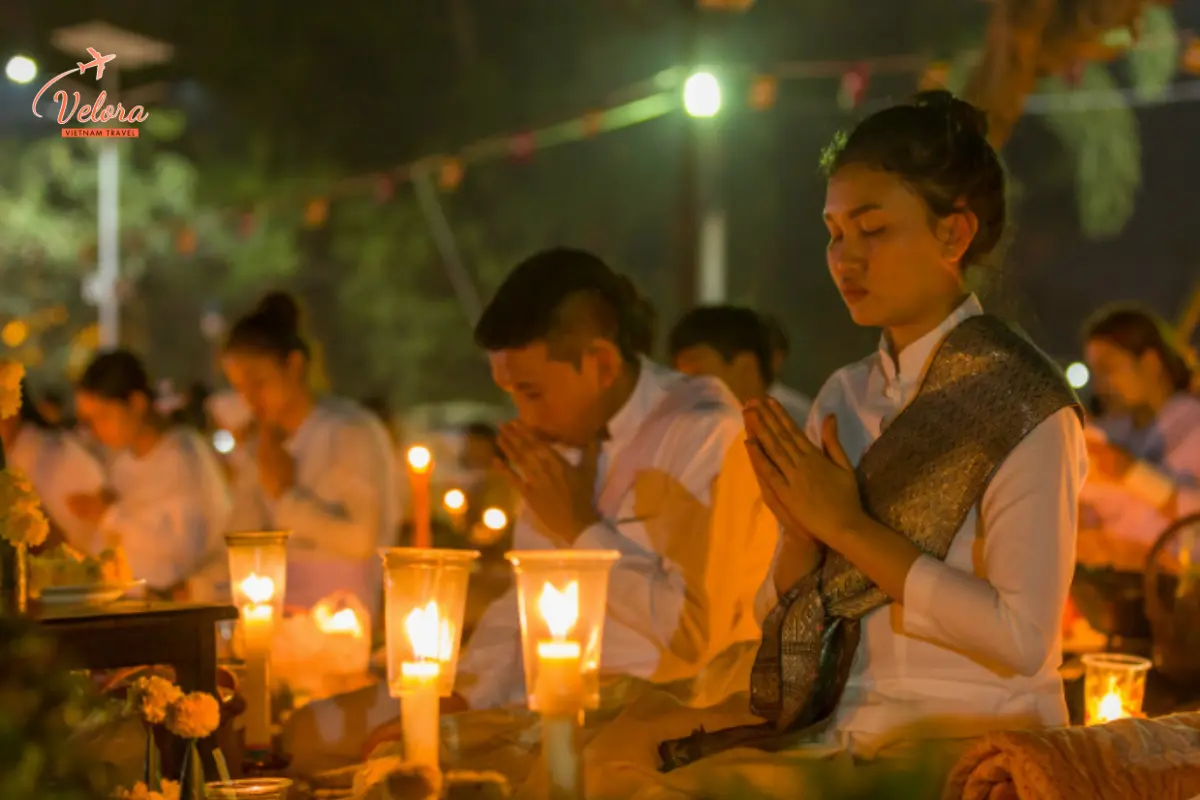
The Traditional Greeting: Sampeah
The sampeah is a gesture made by placing hands together and bowing slightly. While visitors are not expected to perform it perfectly, a simple smile and polite attitude go a long way.
Communication Style
- Soft-spoken and indirect
- Avoid public criticism or raising your voice
- Smiling is often used to ease situations
Patience and kindness are key to positive interactions.
Respect for Elders and Social Hierarchy
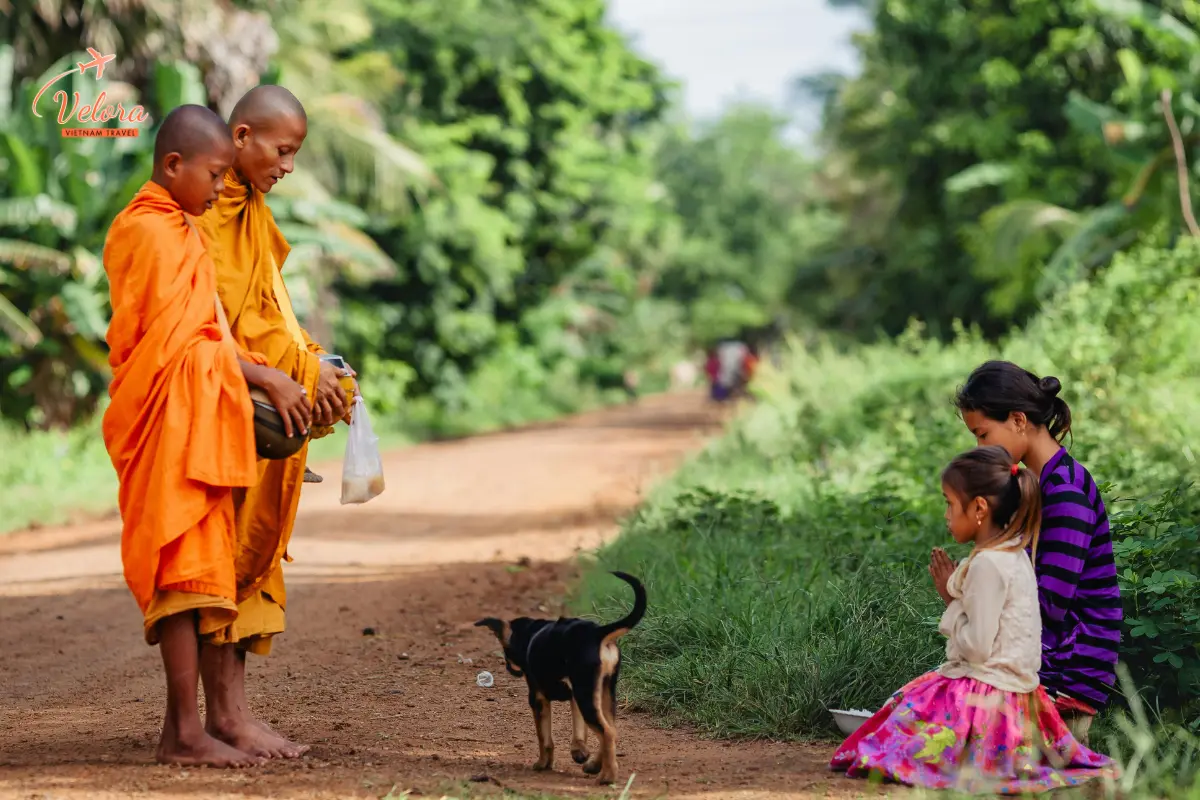
Age and social roles matter in Cambodian society. Elders, teachers, monks, and authority figures are shown deep respect.
As a visitor:
- Allow elders to speak first
- Offer seats to older people
- Use polite body language
These small gestures reflect cultural awareness and humility.
Understanding Cambodian Body Language and Taboos
Certain gestures may be interpreted differently in Cambodia.
Important cultural taboos:
- Do not touch someone’s head
- Avoid pointing your feet at people or religious objects
- Do not step over people or sacred items
- Avoid excessive public displays of affection
These actions are seen as disrespectful, even if unintentional.
Dress Code and Appearance
Cambodians dress modestly, especially outside tourist areas.
For visitors:
- Light, modest clothing is appreciated
- Cover shoulders and knees at temples and rural areas
- Beachwear is suitable only at the beach or resorts
Dressing respectfully helps visitors blend in and gain local trust.
Food Culture and Dining Etiquette
Food is central to Cambodian life, often shared with family and community.
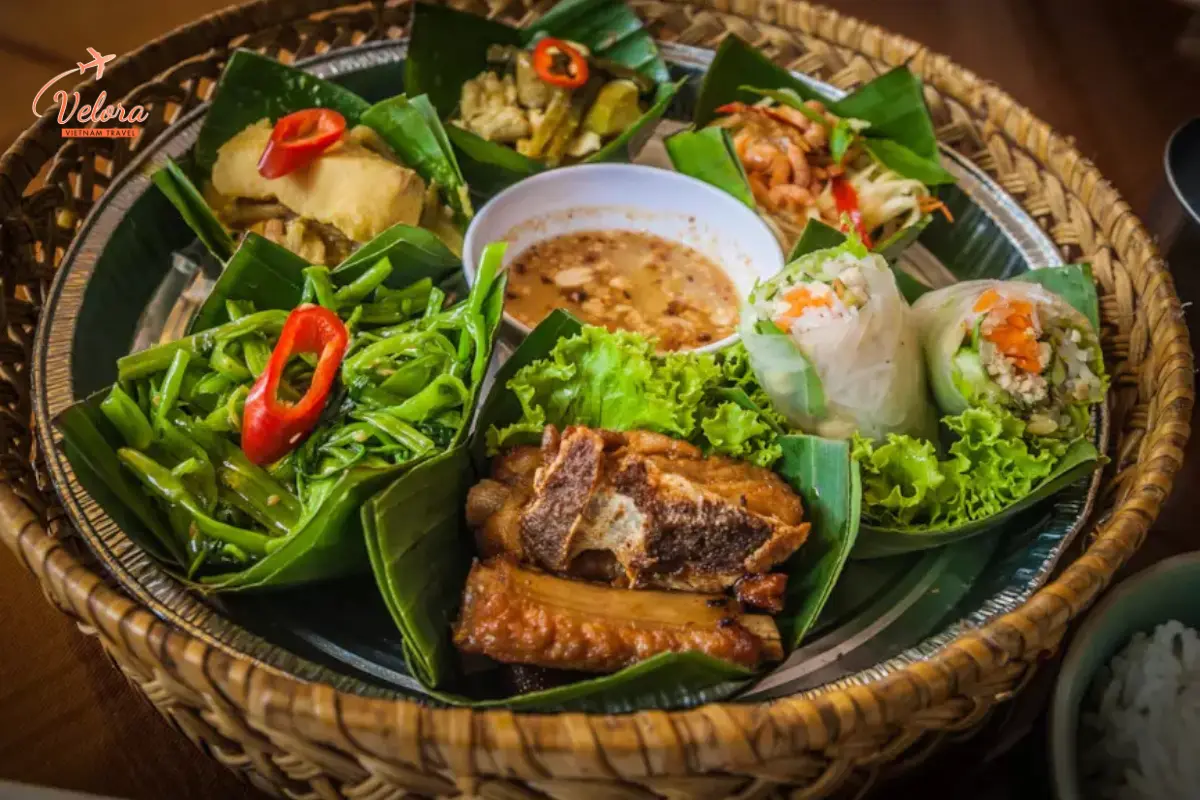
Dining customs to know:
- Meals are typically shared
- Wait for elders to begin eating
- Use a spoon and fork; chopsticks are less common
- It is polite to try a little of everything
Accepting food with both hands is a sign of respect.
Gift-Giving and Politeness
While not required, small gestures of generosity are appreciated.
Good practices:
- Give and receive items with both hands
- Avoid overly expensive gifts
- Small souvenirs from your country are meaningful
Politeness is valued more than material value.
Photography and Cultural Sensitivity
Cambodia is visually striking, but visitors should be mindful.
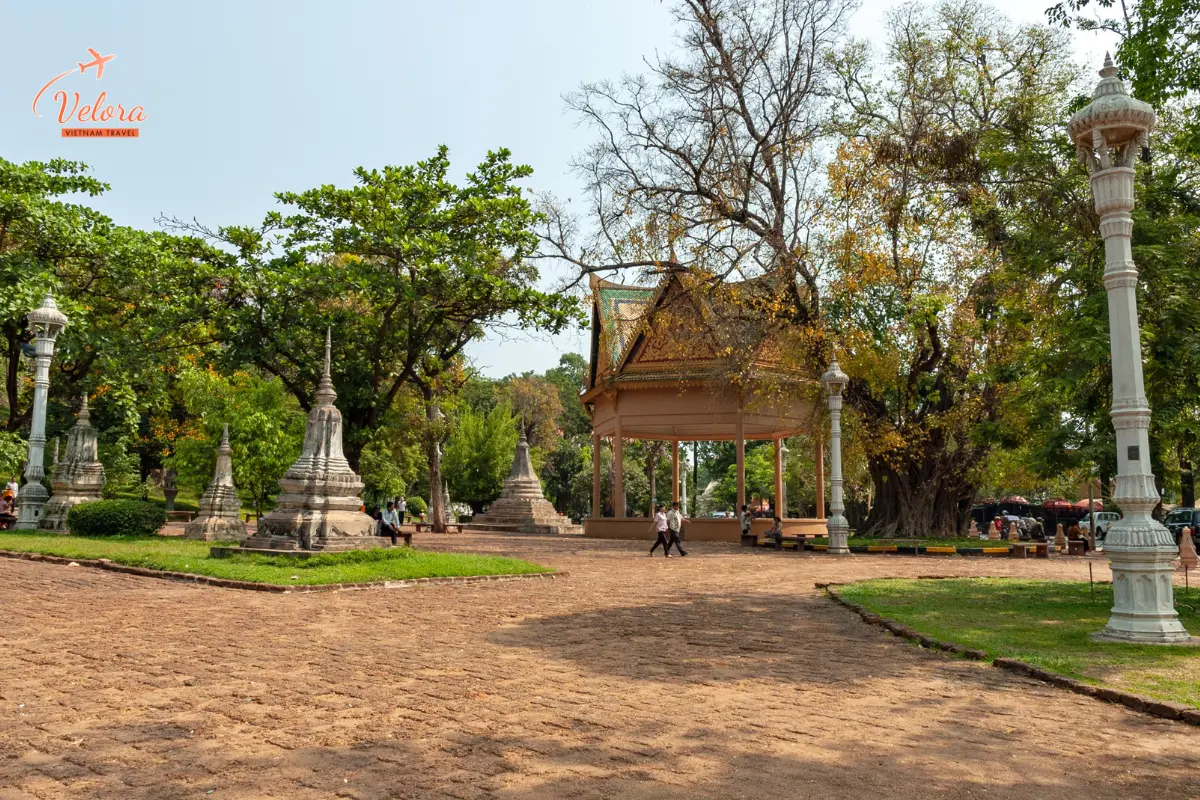
Before taking photos:
- Ask permission, especially of people
- Avoid photographing monks up close without consent
- Be respectful at religious ceremonies
Sensitivity builds trust and deeper connections.
Understanding Cambodia’s History with Sensitivity
Cambodia’s recent history, particularly the Khmer Rouge period, remains a sensitive topic.
For visitors:
- Approach historical sites with respect
- Avoid casual or joking comments
- Listen more than you speak
Acknowledging this history with humility is important.
Responsible and Respectful Travel in Cambodia
To travel responsibly:
- Support local businesses and artisans
- Choose ethical tours and accommodations
- Avoid activities that exploit people or animals
- Respect cultural and religious spaces
Responsible travel helps preserve Cambodia’s cultural integrity.
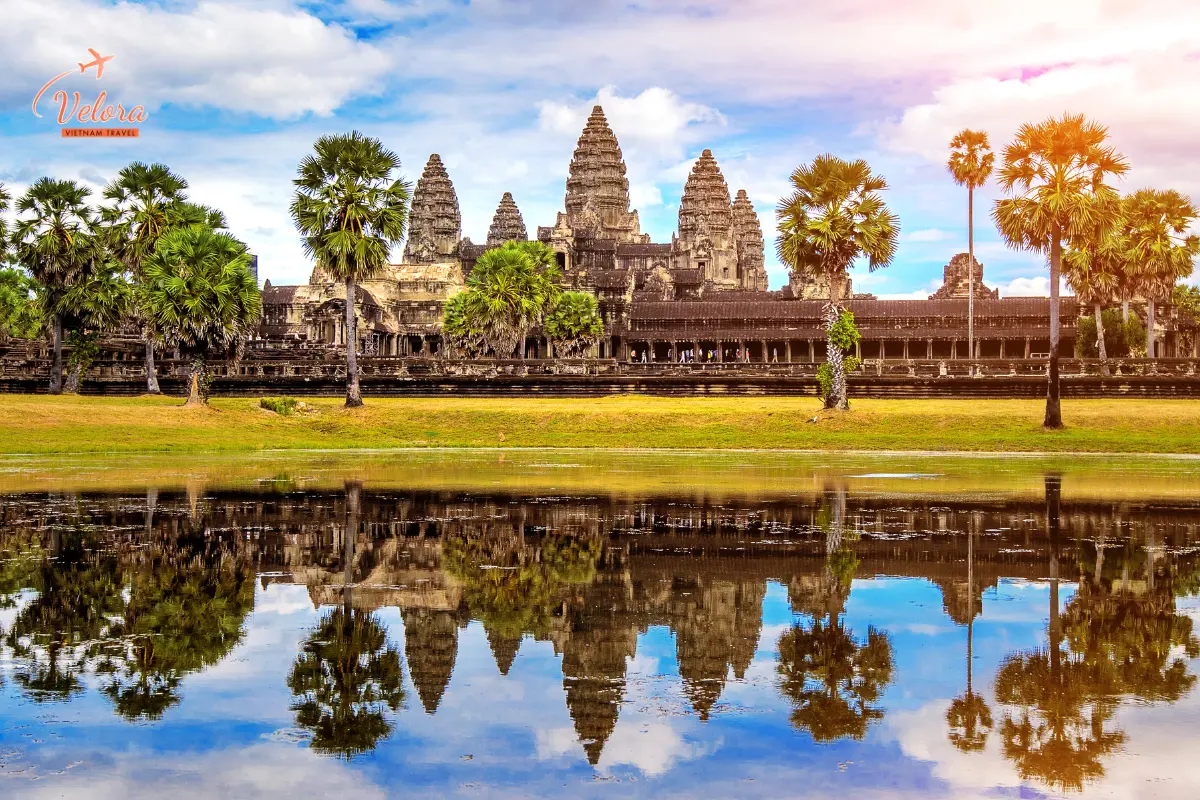
Understanding Cambodian culture as a visitor is not about memorizing rules — it is about traveling with awareness, kindness, and humility. Cambodia is a country that welcomes visitors gently, asking only for respect in return.
When you move slowly, listen carefully, and observe quietly, Cambodia reveals its true beauty — not just in temples or landscapes, but in its people, traditions, and enduring spirit.