
Traditional Lao clothing is not merely a form of dress. It is a language woven from silk, color, and pattern — a quiet expression of identity, belief, and social harmony that has endured for centuries.
In Laos, clothing tells stories. It speaks of region and ritual, of daily life and sacred moments, of respect for nature and reverence for ancestors. For visitors seeking to understand Lao culture beyond surface impressions, traditional attire offers a meaningful point of entry.
The Cultural Role of Traditional Clothing in Laos
In Lao society, traditional clothing is deeply connected to:
- Social values and etiquette
- Religious practices and ceremonies
- Community identity and regional heritage
Even in modern Laos, traditional garments remain present in daily life — worn at temples, weddings, festivals, and official occasions. Clothing is not about display, but about belonging and respect.
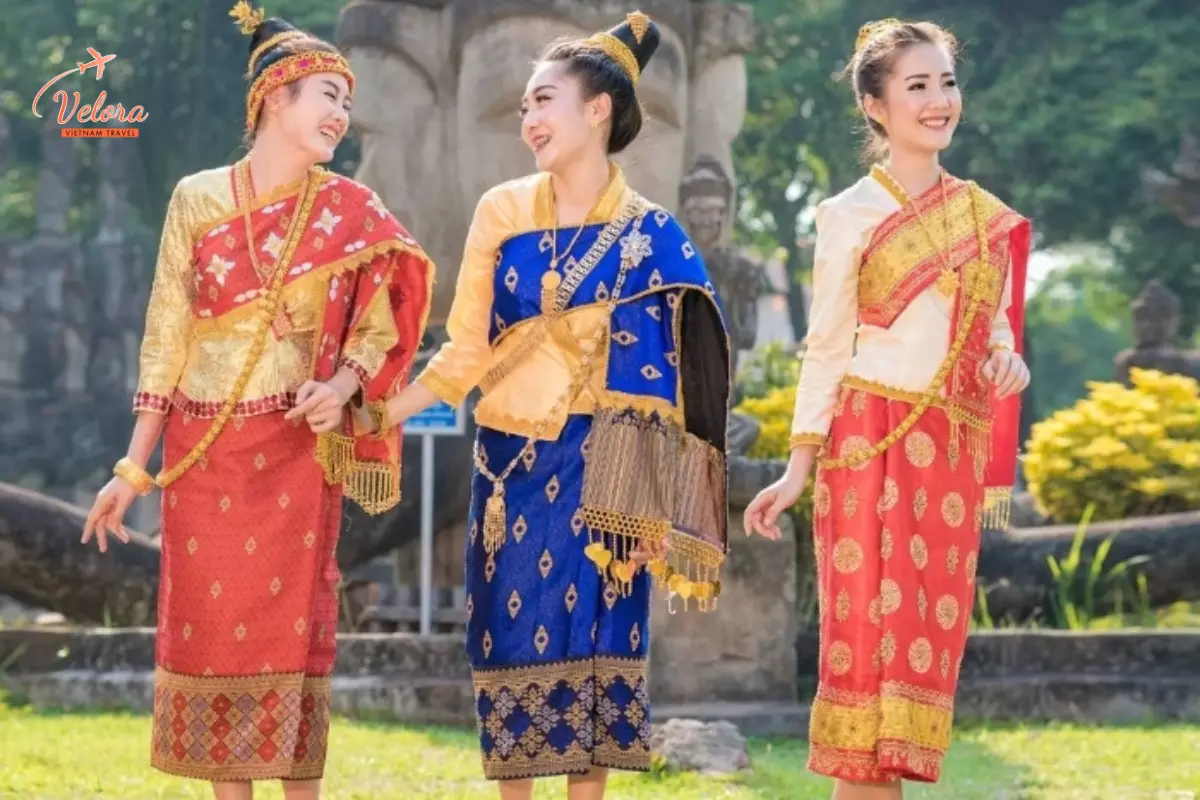
The Sinh: The Heart of Women’s Traditional Lao Dress
What Is a Sinh?
The sinh is a traditional Lao skirt worn by women. It is ankle-length, wrapped around the body, and fastened discreetly at the waist. Though simple in form, the sinh carries complex cultural meaning.
Symbolic Structure of the Sinh
A traditional sinh consists of three parts:
- Hua Sinh (Top Band)
Often plain or lightly patterned, symbolizing humility and restraint. - Phuen Sinh (Main Body)
Woven with repeating motifs representing nature, balance, and continuity. - Tin Sinh (Bottom Border)
Richly decorated with intricate designs, reflecting craftsmanship and cultural pride.
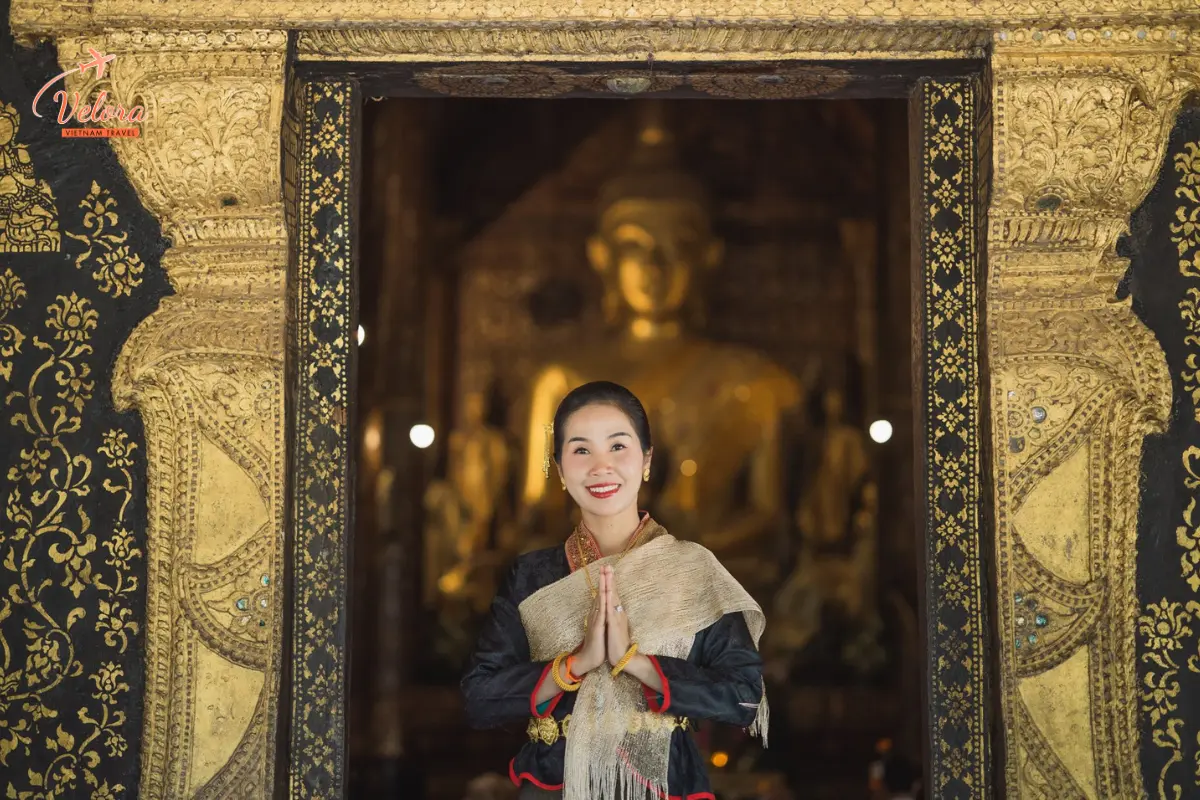
This structure reflects a Lao worldview: simplicity above, harmony in life, and beauty grounded in tradition.
Materials and Colors
Traditional sinhs are woven from silk or cotton, dyed using natural pigments. Common colors include:
- Deep indigo: stability and calm
- Red: vitality and protection
- Gold: spirituality and prosperity
Each color is chosen with intention, not decoration alone.
Traditional Clothing for Lao Men
Salong and Pha Biang
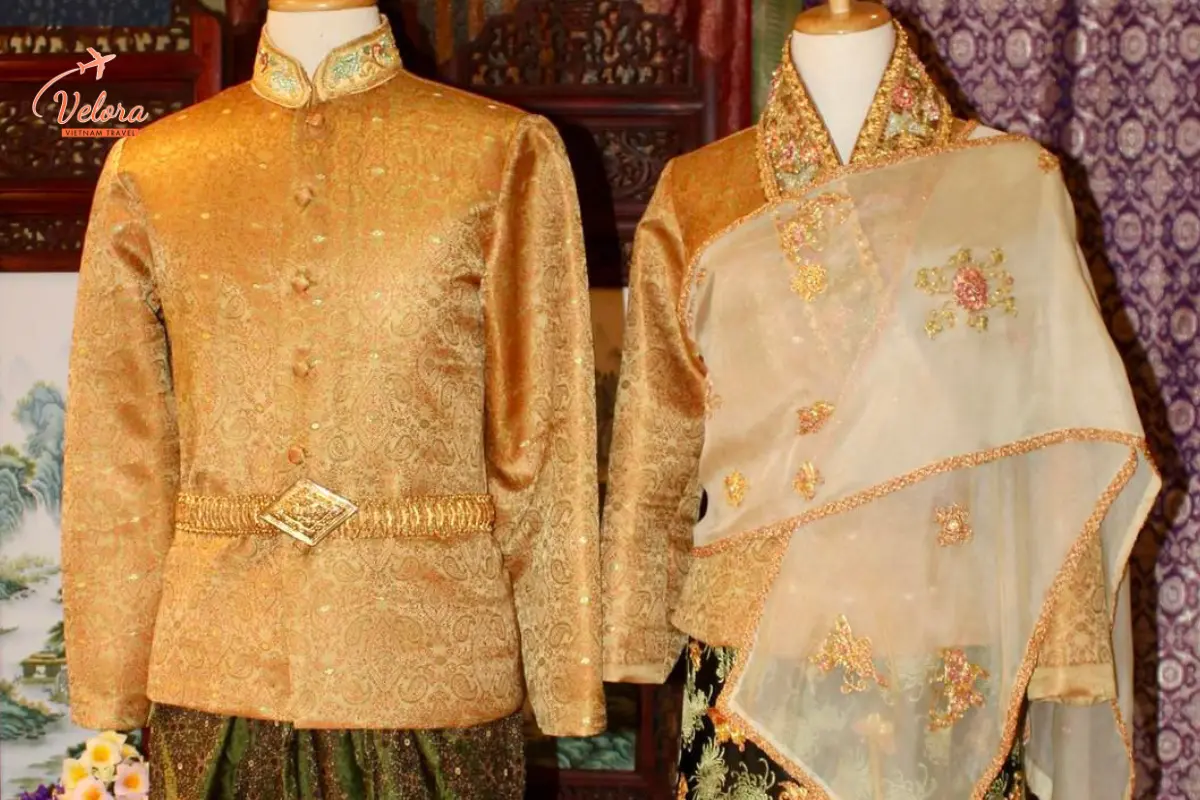
Men traditionally wear salong (loose trousers) or wrap cloths, often paired with a pha biang — a ceremonial silk sash draped over one shoulder.
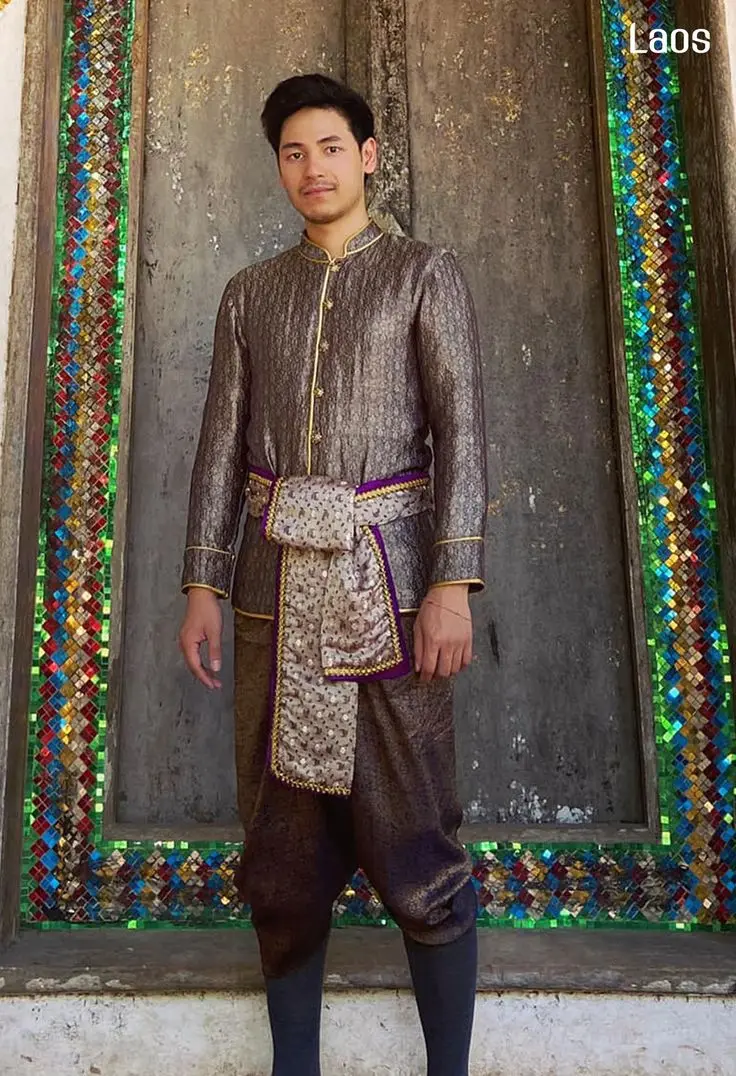
The pha biang signifies:
- Respect during religious ceremonies
- Social maturity
- Participation in important communal events
In daily life, men dress simply, reflecting values of modesty and practicality.
Textiles as Cultural Storytelling
Motifs and Their Meanings
Lao textiles feature symbolic patterns, each carrying layered meaning:
- Naga (mythical serpent): protection, fertility, water, and life
- Lotus flower: purity and spiritual awakening
- Geometric patterns: balance, order, and continuity
- Animals and plants: harmony between humans and nature
These motifs are not random. They are cultural memory made visible.
Traditional Clothing in Lao Ceremonies & Festivals
Traditional dress plays a central role in:
- Baci ceremonies (soul-calling rituals)
- Weddings
- Buddhist festivals
- National celebrations
Wearing traditional clothing during these events expresses respect for ancestors, community, and spiritual balance.
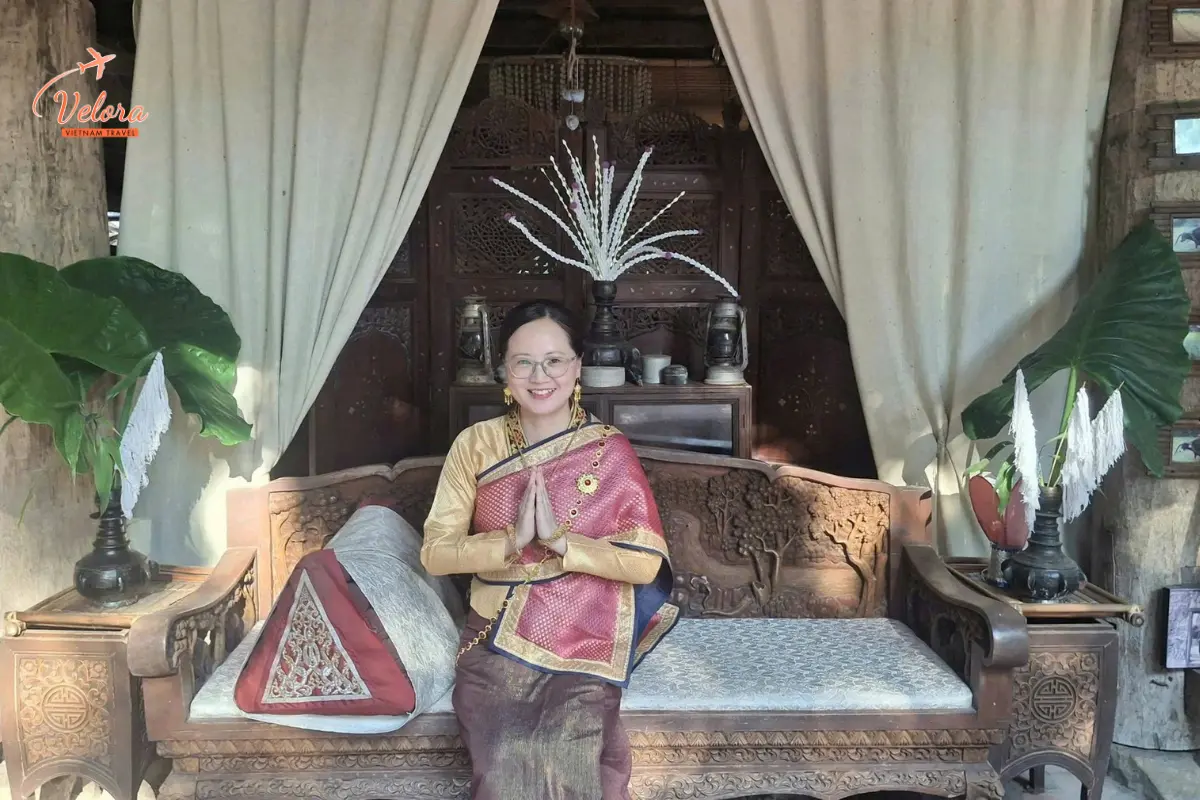
Traditional Clothing in Modern Laos
While modern fashion is present, traditional attire remains respected and visible:
- Worn by women in offices and schools
- Required attire at temples and official events
- Integrated into contemporary fashion designs
Rather than fading, traditional clothing in Laos is evolving — quietly, thoughtfully.
How Visitors Should Engage with Traditional Lao Clothing
Travelers are encouraged to:
- Dress modestly, especially at temples
- Learn the cultural significance before wearing traditional garments
- Purchase textiles from local artisans to support heritage preservation
Respect begins with understanding.
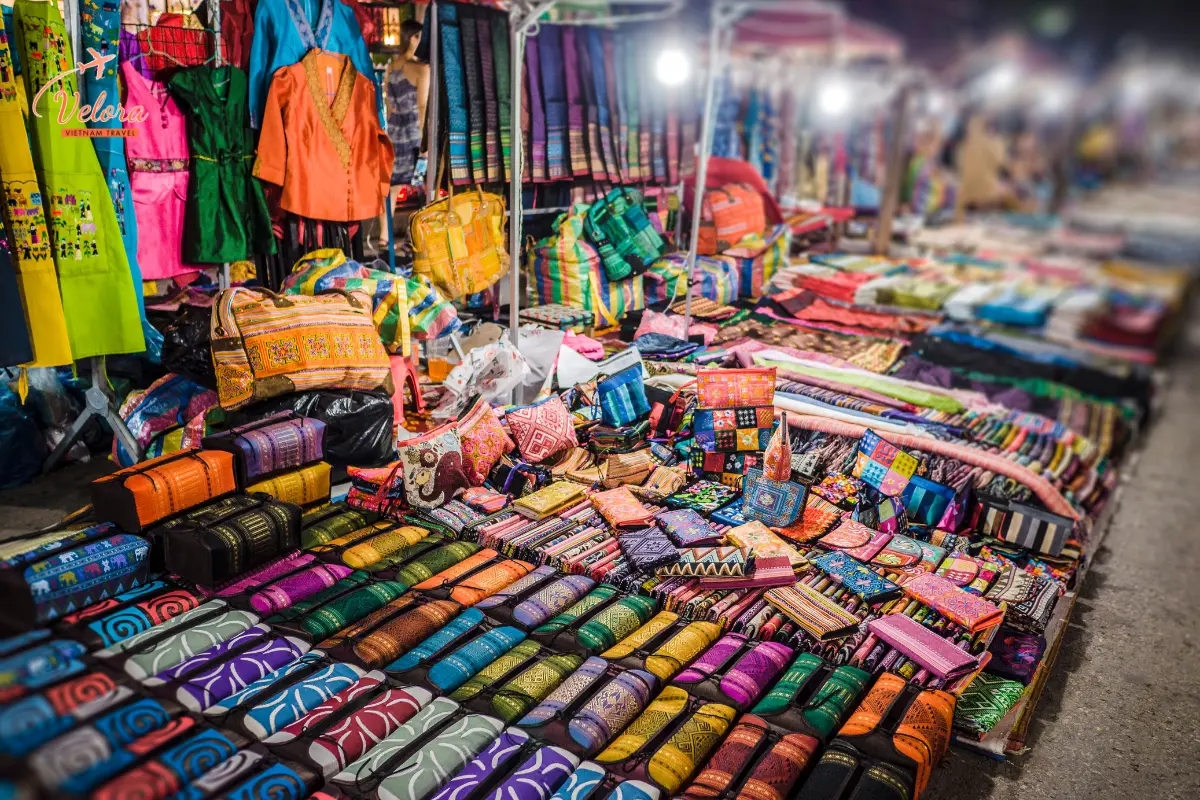
To understand Laos, one must learn to read its textiles. In the quiet weight of silk, the repetition of woven patterns, and the careful balance of color, Lao people preserve their worldview.
Traditional clothing in Laos is not frozen in the past. It moves gently through the present, carrying meaning forward — thread by thread.